
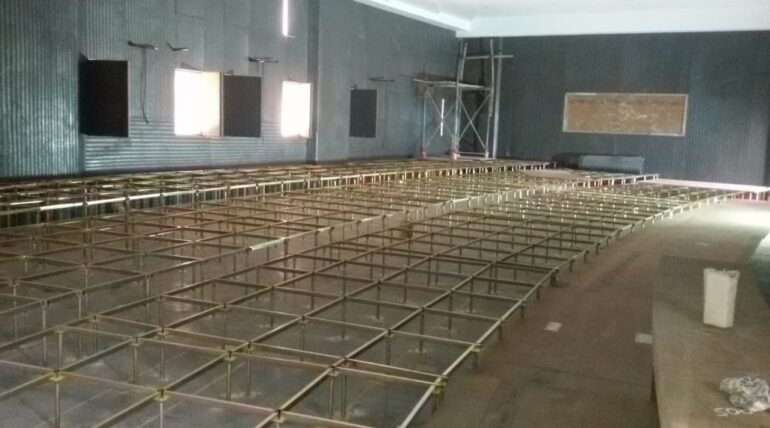
Server rooms and data centres are among the most demanding environments within a building. They house critical IT infrastructure, including servers, storage systems, networking equipment, and power distribution units, all of which require reliable support systems to ensure uninterrupted operation.
One of the most important components of these facilities is the flooring system. A well-designed false flooring system not only supports heavy equipment but also facilitates cable management, cooling efficiency, maintenance accessibility, and future scalability.
This guide highlights the key factors to consider when selecting the right false flooring system for server rooms and data centres.
Why False Flooring is Essential in Server Rooms and Data Centres
Modern IT facilities rely on a large network of power cables, data connections, cooling systems, and communication infrastructure. Managing these services efficiently is critical for operational performance.
False flooring creates an accessible underfloor void that can be used for:
- Power cable distribution
- Data and networking cables
- Fibre optic infrastructure
- Airflow management
- Equipment connectivity
- Future service expansion
This organized approach helps maintain a clean, efficient, and easily maintainable environment.
1. Evaluate Load-Bearing Requirements
One of the first considerations when selecting a flooring system is its load-bearing capacity.
Server rooms and data centres often contain:
- Server racks
- Network cabinets
- UPS systems
- Battery banks
- Storage equipment
- Cooling units
These concentrated loads can be significantly higher than those found in standard office environments.
The selected flooring system should be designed to support both static and rolling loads while maintaining structural stability throughout its service life.
2. Consider Anti-Static Properties
Electrostatic discharge (ESD) can potentially affect sensitive electronic equipment and network infrastructure.
For this reason, many server rooms specify flooring systems with anti-static or conductive surface finishes.
Key benefits include:
- Reduction of static charge buildup
- Improved protection for electronic equipment
- Enhanced operational reliability
- Compliance with project-specific technical requirements
Anti-static HPL laminate finishes are commonly used in raised flooring systems designed for IT environments.
3. Assess Airflow and Cooling Requirements
Temperature control is critical in server rooms and data centres.
Many facilities use the underfloor void created by the raised floor as part of the cooling strategy. Conditioned air is distributed beneath the floor and supplied through perforated floor panels positioned near equipment racks.
When evaluating a flooring system, consider:
- Underfloor airflow requirements
- Cooling distribution strategy
- Perforated panel availability
- Future cooling capacity needs
A flooring system that supports efficient airflow can contribute to improved equipment performance and energy efficiency.
4. Evaluate Panel Strength and Durability
Data centres operate continuously and require flooring systems capable of performing reliably for many years.
Important considerations include:
- Panel construction quality
- Impact resistance
- Long-term dimensional stability
- Resistance to wear and damage
- Performance under continuous loading
Durable flooring systems help minimize maintenance requirements and support uninterrupted operations.
5. Plan for Cable Management
Modern server rooms often contain thousands of power and data connections.
An effective false flooring system should provide sufficient underfloor space to accommodate:
- Power distribution cables
- Network cabling
- Fibre optic systems
- Communication infrastructure
- Future cabling additions
Proper cable management improves accessibility, simplifies maintenance, and reduces operational risks.
6. Consider Floor Height Requirements
The required floor height varies depending on the volume of services and airflow requirements.
Factors influencing floor height include:
- Number of cables
- Air distribution requirements
- Equipment density
- Future expansion plans
Providing adequate underfloor space during the initial design stage can prevent costly modifications later.
7. Ensure Easy Maintenance Access
Infrastructure changes are common in IT facilities. Equipment upgrades, cabling additions, and maintenance activities require regular access to the underfloor area.
A modular false flooring system allows individual panels to be removed and reinstalled quickly, enabling:
- Faster maintenance
- Easier inspections
- Simplified upgrades
- Reduced downtime
This accessibility is one of the primary reasons raised flooring remains the preferred choice for server environments.
8. Consider Future Scalability
Technology infrastructure evolves rapidly. Data centres and server rooms frequently expand to accommodate increased capacity and new equipment.
A well-designed flooring system should support:
- Additional server racks
- Increased cable density
- New cooling infrastructure
- Future technology upgrades
Planning for scalability ensures the facility remains adaptable to changing operational requirements.
Select a Reliable Manufacturer and Installation Partner
The quality of a false flooring system depends not only on the product but also on the expertise of the supplier and installer.
When evaluating a false flooring manufacturer in Mumbai, consider:
- Product quality and testing standards
- Load performance certifications
- Technical design support
- Installation experience
- Availability of accessories and replacement components
- After-sales service capabilities
An experienced manufacturer can help ensure the flooring system meets both current performance requirements and future expansion needs.
Common Flooring Features Recommended for Data Centres
Many modern server room and data centre projects incorporate:
- High-density load-bearing panels
- Anti-static HPL finishes
- Stringer-supported systems
- Perforated airflow panels
- Adjustable pedestal systems
- Precision-engineered support structures
These features contribute to the reliability, accessibility, and performance expected in critical IT environments.
Conclusion
Selecting the right false flooring system for a server room or data centre involves much more than choosing a floor finish. Factors such as load-bearing capacity, anti-static performance, airflow management, accessibility, durability, and future scalability all play an important role in the long-term success of the facility.
By carefully evaluating these requirements and partnering with an experienced false flooring manufacturer in Mumbai, organizations can implement a flooring solution that supports operational efficiency, equipment reliability, and future infrastructure growth.