
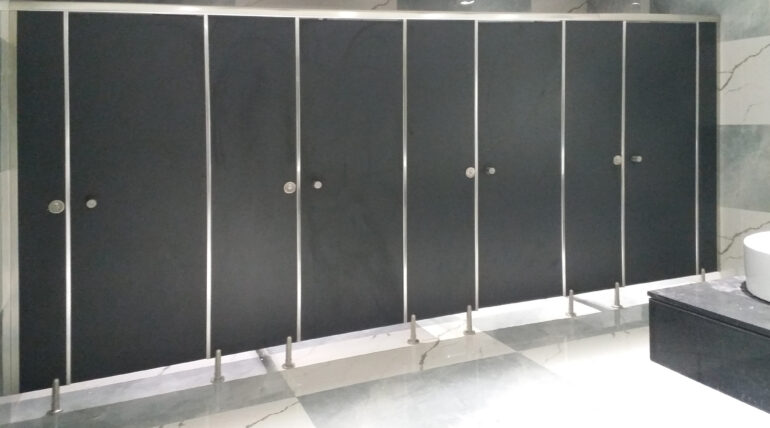
Commercial washrooms are expected to meet increasingly high standards of hygiene, durability, and user comfort. While cleaning protocols and maintenance routines play a critical role, the material used in urinal partition systems is often overlooked. In reality, the composition of a urinal partition directly impacts its ability to resist moisture, prevent bacterial growth, withstand cleaning chemicals, and maintain long-term hygiene performance.
For architects, facility managers, and project consultants, understanding material composition is essential when selecting a reliable urinal partition system. Leading urinal partition manufacturer in Mumbai believe that material selection should be based not only on aesthetics but also on long-term hygiene and maintenance requirements.
Why Material Selection Matters in Commercial Washrooms
Urinal partitions operate in environments that are constantly exposed to:
- Water splashes
- High humidity
- Frequent cleaning cycles
- Cleaning chemicals and disinfectants
- Heavy daily usage
Materials that absorb moisture, deteriorate under cleaning agents, or develop surface damage can quickly become breeding grounds for bacteria and unpleasant odours. Hygienic washroom design therefore begins with choosing materials that can withstand these demanding conditions while remaining easy to clean and maintain.
The Relationship Between Material Composition and Hygiene
The hygiene performance of a urinal partition is influenced by several material characteristics:
1. Surface Porosity
Porous materials can absorb moisture, dirt, and contaminants over time. This makes cleaning more difficult and can contribute to bacterial growth.
Non-porous surfaces, on the other hand:
- Prevent moisture absorption
- Reduce stain formation
- Simplify cleaning procedures
- Support better hygiene standards
Smooth, dense surfaces are generally easier to sanitise and maintain in commercial washrooms.
2. Moisture Resistance
Commercial washrooms experience constant exposure to water and humidity. Materials that swell, warp, or delaminate when exposed to moisture can create gaps and damaged surfaces where dirt and bacteria accumulate.
High-performance urinal partition materials should provide:
- Water resistance
- Dimensional stability
- Resistance to swelling
- Long-term structural integrity
Moisture resistance is one of the most important factors affecting hygiene performance.
3. Resistance to Cleaning Chemicals
Modern washrooms require regular sanitisation using disinfectants and cleaning agents. Materials that degrade under repeated cleaning may lose their surface quality and become harder to maintain.
A hygienic urinal partition system should withstand:
- Daily cleaning routines
- Disinfectants
- Sanitising solutions
- Frequent wiping and washing
Durable materials help maintain both appearance and hygiene throughout their service life.
Why Compact Laminate Performs Better
Among the various materials available for commercial washrooms, High Pressure Laminate (HPL) compact laminate has become one of the preferred choices for urinal partitions due to its dense and durable composition.
Compact laminate is manufactured by compressing multiple layers of kraft paper impregnated with phenolic resins under high pressure and temperature. This process creates a solid, non-porous panel that is exceptionally resistant to moisture and daily wear.
Hygiene Benefits of Compact Laminate Urinal Partitions
- Non-Porous Surface
The dense surface prevents absorption of water and contaminants, making cleaning easier and more effective.
- Moisture Resistance
Compact laminate remains stable in humid washroom environments without swelling or warping.
- Easy Maintenance
Routine cleaning with standard cleaning agents is generally sufficient to maintain hygiene and appearance.
- Long-Term Durability
Its high-density composition helps resist stains, impacts, and everyday wear that could otherwise compromise hygiene performance.
Other Materials Used in Urinal Partitions
While compact laminate is widely preferred, other materials are also used depending on project requirements.
- Glass
Glass urinal partitions are often chosen for premium commercial offices, hospitality projects, airports, and high-end public washrooms where aesthetics are a priority. Toughened acid frosted or tempered glass provides a sleek, modern appearance while offering a smooth, non-porous surface that is easy to clean and maintain.
Hygiene Benefits of Glass Urinal Partitions
- Non-porous surface prevents moisture absorption.
- Easy to clean and sanitize.
- Resistant to staining and discoloration.
- Maintains its appearance over time.
- Creates a modern and premium washroom environment.
However, glass partitions require regular cleaning to maintain their visual appeal, as water spots and smudges can be more visible compared to other materials. For this reason, they are often selected where both aesthetics and hygiene are equally important.
- Stainless Steel Panels
Stainless steel offers excellent durability, corrosion resistance, and ease of cleaning. It is commonly used in healthcare facilities, industrial environments, and premium commercial projects where hygiene is a primary concern.
- PVC-Based Systems
PVC partitions are often selected for budget-sensitive projects. However, long-term durability and appearance retention may vary depending on product quality and application requirements.
Customized and Hybrid Material Urinal Partitions
Modern commercial washrooms increasingly demand solutions that go beyond standard partition designs. Architects and designers often specify customized urinal partitions that combine multiple materials to achieve specific aesthetic, durability, and hygiene objectives.
Some popular hybrid configurations include:
- Toughened glass panels with gold or matt black coated metal frames
- Compact laminate (HPL) panels integrated with metal support structures
- Glass and compact laminate fusion combinations for enhanced visual appeal
- Custom-shaped HPL partitions with curved, angled, or decorative shapes
- Designer partitions featuring laser-cut metal elements, branding, or custom finishes
Hygiene Advantages of Hybrid Systems
When designed correctly, hybrid partitions can offer the benefits of multiple materials while maintaining excellent hygiene standards and visual appeal.
The key to maintaining hygiene performance in customized systems lies in careful detailing. Smooth junctions, concealed fixtures, corrosion-resistant hardware, and easy-to-clean surfaces help prevent dirt accumulation and simplify maintenance.
Beyond Material: Design Also Supports Hygiene
Even the best material performs better when combined with good design practices.
Effective urinal partition systems should include:
- Smooth, easy-to-clean surfaces
- Minimal dirt-trapping joints
- Corrosion-resistant hardware
- Proper partition dimensions
- Durable fixing systems
- Efficient layout and moving paths
Well-designed partitions help reduce maintenance effort while supporting cleaner washroom environments.
Conclusion
When evaluating urinal partition systems, material composition should be treated as a primary consideration. The ability of a partition to resist moisture, tolerate cleaning chemicals, prevent bacterial accumulation, and maintain its structural integrity directly influences washroom hygiene and user experience.
For architects, builders, and facility managers seeking long-lasting restroom solutions, selecting high-quality compact laminate or other performance-driven materials can significantly improve hygiene outcomes and reduce maintenance costs over time.
As an experienced urinal partition manufacturer in Mumbai, T-Line provides commercial urinal partition solutions designed to deliver durability, hygiene, customisation and long-term performance for modern washroom environments.