
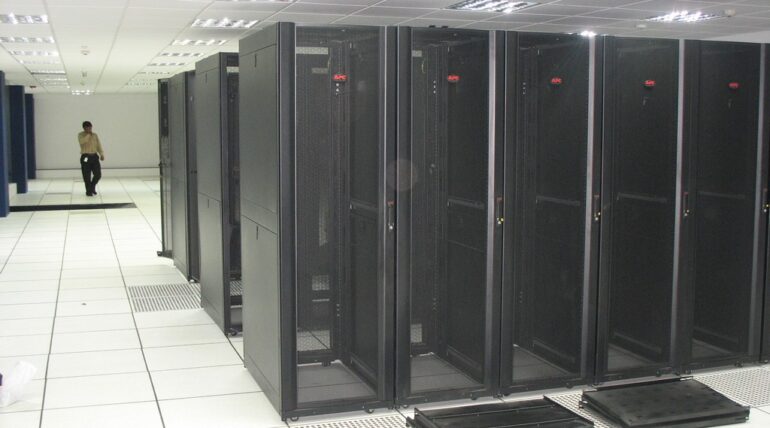
Designing a server room requires careful planning to ensure reliability, safety, and long-term performance. The false flooring system must support heavy equipment, facilitate cable management, and provide easy access for maintenance throughout the facility’s lifecycle.
For consultants, architects, MEP engineers, and project managers, laminated tile raised flooring is one of the most commonly specified solutions for server rooms due to its structural performance, accessibility, and durability.
This guide outlines the key factors specifiers should evaluate when selecting laminated tile raised flooring for server room applications.
What is Laminated Tile Raised Flooring?
Laminated tile raised flooring consists of modular floor panels supported on adjustable pedestals, creating an accessible void between the structural floor and the finished walking surface.
The top surface is typically finished with High Pressure Laminate (HPL), offering a durable, antistatic and wear-resistant finish suitable for commercial and technical environments. The underfloor space is used to accommodate:
- Power distribution cables
- Data and networking cables
- Fibre optic infrastructure
- Communication systems
- Cooling air distribution (where required)
Its modular construction allows individual panels to be removed for quick access to underfloor services.
Understand the Load Requirements
Server rooms contain concentrated equipment loads that are significantly heavier than those found in standard office spaces.
When specifying laminated tile raised flooring, consider the floor’s ability to support:
- Server racks
- Network cabinets
- UPS systems
- Battery banks
- Cooling equipment
- Storage systems
The flooring system should be selected based on the required point, rolling, and concentrated loads to ensure long-term structural performance.
HPL Finish
The HPL finish contributes to both the durability and appearance of the flooring.
Good quality HPL surfaces offer:
- High abrasion resistance
- Easy maintenance
- Long service life
- Consistent appearance under heavy usage
Selecting the right finish and quality ensures the flooring continues to perform well in demanding server room environments.
Consider Anti-Static Performance
Electrostatic discharge (ESD) can interfere with sensitive electronic equipment, making anti-static performance an important specification for server rooms.
Many laminated tile raised flooring systems are available with anti-static HPL finishes that help control the buildup and discharge of static electricity.
These finishes are particularly recommended for:
- Server rooms
- Data centres
- Network operation centres
- Control rooms
- Telecommunication facilities
Specifying an anti-static surface helps improve equipment protection and supports reliable operation.
Plan for Cable Management
A server room contains extensive power and data cabling that must remain organized and easily accessible.
Raised flooring creates a dedicated underfloor service zone that allows for:
- Organized cable routing
- Separation of power and data services
- Easier future cable additions
- Simplified access for maintenance and troubleshooting
Well-planned cable management also contributes to improved airflow and a cleaner working environment.
Evaluate Airflow Requirements
Many server rooms use the underfloor void as part of their cooling strategy.
If underfloor air distribution is part of the design, the flooring specification should consider:
- Raised floor height
- Perforated airflow panels
- Cooling layout
- Future cooling expansion
Coordinating the false flooring system with the HVAC design helps achieve efficient temperature control throughout the facility.
Ensure Easy Access for Maintenance
Technology infrastructure is continually upgraded throughout the life of a server room.
A modular flooring system allows maintenance personnel to:
- Lift individual panels
- Access underfloor services quickly
- Perform repairs efficiently
- Upgrade infrastructure with minimal disruption
This accessibility reduces downtime and simplifies facility management.
Verify System Compatibility
The false flooring system should be compatible with other building services and equipment installed within the server room.
Specifiers should evaluate:
- Pedestal height options
- Stringer requirements
- Cable outlet accessories
- Ramp and edge details
- Integration with electrical and HVAC systems
Proper coordination during the design stage helps avoid installation challenges later.
Consider Long-Term Performance
Beyond initial installation, the flooring system should continue to perform reliably for many years.
Important evaluation criteria include:
- Structural durability
- Dimensional stability
- Ease of replacing damaged panels
- Availability of replacement components
- Maintenance requirements
A well-specified false flooring system reduces lifecycle costs and supports uninterrupted operation.
Work with an Experienced Supplier
The quality of a raised flooring installation depends on both the product quality and the expertise of the installer.
When selecting a raised flooring partner, consider:
- Product testing and certifications
- Manufacturing quality
- Technical support
- Installation experience
- Lead time
- Availability of accessories
- After-sales service
An experienced supplier can also assist with selecting the most suitable panel specifications based on the project’s technical requirements.
Conclusion
Selecting the right laminated tile raised flooring for a server room requires careful consideration of load-bearing capacity, anti-static performance, cable management, cooling requirements, accessibility, and long-term durability. By evaluating these factors during the specification stage, architects, consultants, and engineers can ensure the raised flooring system supports both current operational needs and future infrastructure upgrades.
A properly specified laminated tile raised flooring system contributes to a reliable, efficient, and adaptable server room making it an essential component of modern IT infrastructure.